| Reader situation | What to check | Planning use |
|---|---|---|
| Simplest possible first purchase | A buy screen that shows price and total before you confirm, and a payment method you already use | Pick the platform where you can finish a purchase without hunting through settings. |
| Small order | Spot taker fee: Coinbase 0.6%, Kraken 0.4%, Binance 0.1% | Use as a starting comparison, then confirm the live rate on each exchange’s own fee page. |
| Funding by bank transfer or card | Fiat deposits by bank transfer or card may carry fees | Check the deposit charge for your method before sending money. |
| Preference for a large, established platform | CoinGecko tracks 152 exchanges with $65.6 Billion 24h trading volume; Trust Score draws on liquidity, scale and cybersecurity | Use it to shortlist, not as a measure of how easy a platform is for beginners. |
| Account that may sit idle | Some exchanges charge inactivity fees after a set period | Read the account-fee terms before leaving a small balance untouched. |
Fee figures come from a published fee comparison, and exchange scale and Trust Score details come from CoinGecko’s exchange listing.
The best crypto exchange for beginners is the one that makes a small first purchase simple and cheap: a clear buy screen, a payment method you already use, and fees you can read before confirming. Fee levels differ widely between platforms.
The crypto exchange reviews hub covers individual platforms, and the list of best crypto exchanges ranks them overall. This page narrows the question to the first purchase: what to look for in the buy flow, how fees bite on a small order, and which security steps to take straight away.
Easiest exchange for a first purchase
A beginner-friendly crypto exchange is one where a first purchase takes a few clear steps and the cost is visible before you commit. No single platform is easiest for everyone, because ease depends on which payment method you hold and which screens you find readable.

What a simple buy flow looks like
Look for a screen that names the asset, shows the price and states the total you will pay. A beginner who can see all three before pressing confirm is far less likely to be surprised by the result. Platforms that push you straight into order books, charts and order types suit people who already know what a limit order is, and they add friction for a first buy.
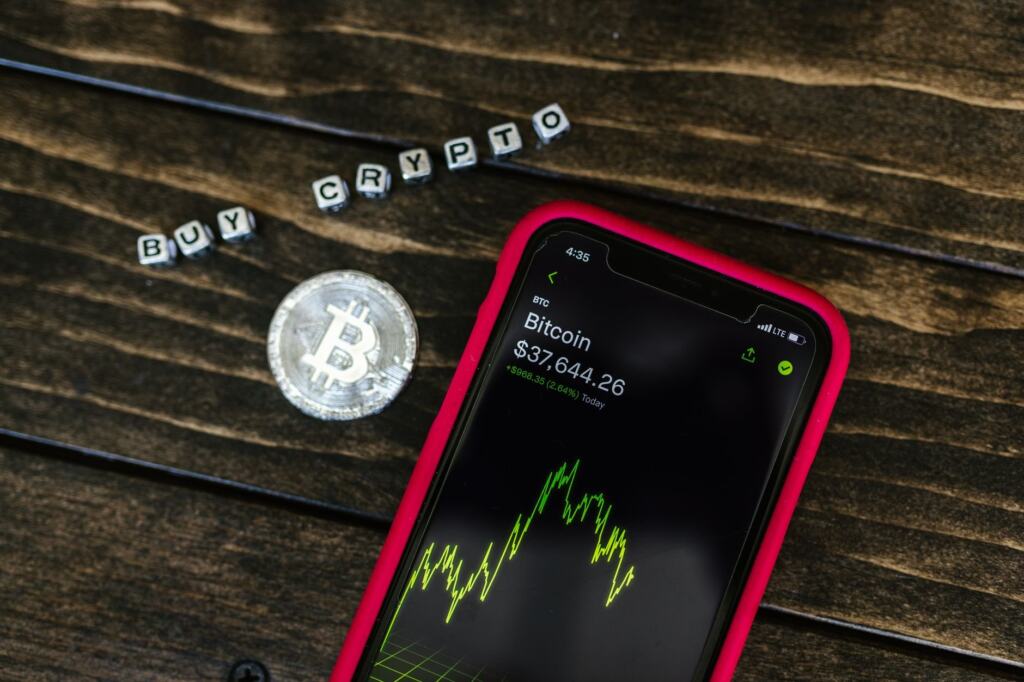
A practical test is to open the app or website before depositing anything. If you can reach the buy screen, see the fee wording and find the support or help pages without verifying a large pile of documents or searching menus, the platform is a reasonable candidate. If the fee is only revealed after you have funded the account, move on to another option.
Choosing a payment method
Fiat deposits by bank transfer or card may carry fees, according to a fee comparison guide, and the charge depends on the exchange and the method. For a beginner this means the payment method is part of the price of the first purchase, not a separate decision.
- Bank transfer: suits people who are not in a hurry and want to read the deposit terms first.
- Card: suits people who want to finish quickly, but check the card charge on the exchange’s own fee page before you enter details.
Whichever you pick, find the deposit fee for that method on the exchange’s official fee or help page. That page, not a review, is the authority for the current figure.
Best fit for small investments
For small purchases, the percentage fee on each order and the cost built into the price matter more than any signup bonus. A platform with a low rate and a clear total suits a small first order better than one with a long feature list.
Trading fees on small orders
The fee comparison guide lists these spot taker fees. Taker fees are the ones that apply to orders that do not add liquidity to the market, so the taker figure is the safer one to plan around for a simple buy.
- Binance: 0.1%, the lowest of the three listed.
- Kraken: 0.4%, a middle option.
- Coinbase: 0.6%, the highest of the three listed.
The same guide notes that taker fees are often higher than maker fees. These are headline rates from a secondary comparison, so treat them as a starting point and confirm the live schedule on each exchange before buying. A lowest fee crypto exchange is not automatically the best choice for a beginner, since a low rate on a confusing platform can still cost you through mistakes.
Costs that sit outside the headline rate
The spread is the gap between buy and sell prices. It is not charged directly but is built into the price you pay when buying or selling. That makes it easy to miss, because it never appears as a line item.
The practical response is to compare the total you would pay on two platforms for the same purchase, not only the quoted fee rate. Add any deposit charge for your payment method to that comparison. A platform that looks cheap on the fee page can end up costlier once the spread and deposit charge are included.
Best fit for a large, established platform
A large platform suits beginners who value liquidity and scale over low fees or a minimal interface. Size is a useful filter, but it is not a measure of how easy the app is to use.
Reading CoinGecko’s exchange data
CoinGecko says it currently tracks 152 crypto exchanges with a total 24h trading volume of $65.6 Billion, which shows how crowded the field is. Its Trust Score is calculated from metrics such as liquidity, scale of operations and cybersecurity score, according to the CoinGecko exchange listing. Trust Score is a third-party rating of operations, not a test of beginner friendliness.
Use the score to drop platforms with weak ratings from your shortlist, then choose between the remaining ones on buy-flow clarity, payment method and fees. A high score with a payment method you cannot use is no help to you.
When a bigger name is not the answer
If your priority is a very small order at the lowest rate, the largest platform may not be the cheapest. If your priority is an uncomplicated first purchase, a smaller interface-focused service may suit better. Choose by the task, then use the platform’s size only as a tiebreaker.
Before you sign up
A few checks before registering save more money than any later optimisation. They also cover the most common beginner errors.
A short pre-signup checklist
- Fee page first: find the trading fee, the deposit fee for your payment method and any account fees.
- Buy screen: confirm you can see the price and total before confirming an order.
- Payment method: make sure the method you want to use is accepted and check its charge.
- Third-party rating: glance at the platform’s Trust Score on CoinGecko, then move on.
First security steps
Once the account exists, secure it before depositing money. Set a strong password that you use nowhere else, and switch on two-factor authentication using an authenticator app where the exchange offers one. Do both before the first deposit, because an unprotected account holding funds is the easiest thing to lose.
Mistakes beginners make
- Judging by the headline rate alone: the spread and deposit charge are part of the real cost.
- Treating a trust rating as a fit test: it measures operations, not how clear the app is for a first-time buyer.
- Funding before reading the fee page: the deposit method can carry its own charge.
- Skipping security setup: delaying account protection until after the first deposit leaves funds exposed.
Frequently asked questions
| Question | Answer |
|---|---|
| Is the lowest trading fee always the cheapest way to start? | No. The spread is built into the buy price, and deposits by bank transfer or card may carry their own fees, so compare the total cost of the purchase. |
| What is the difference between maker and taker fees? | Taker fees apply to orders that do not add liquidity to the market and are often higher than maker fees. For a simple buy, plan around the taker figure. |
| Can an account I do not use cost me money? | On some exchanges, yes. A few charge inactivity fees on accounts left idle for a set period, so read the account-fee terms before parking a balance. |
| Does a high Trust Score mean an exchange is easy to use? | Not necessarily. CoinGecko builds the score from liquidity, scale of operations and cybersecurity, which says little about how simple the buy screen is. |