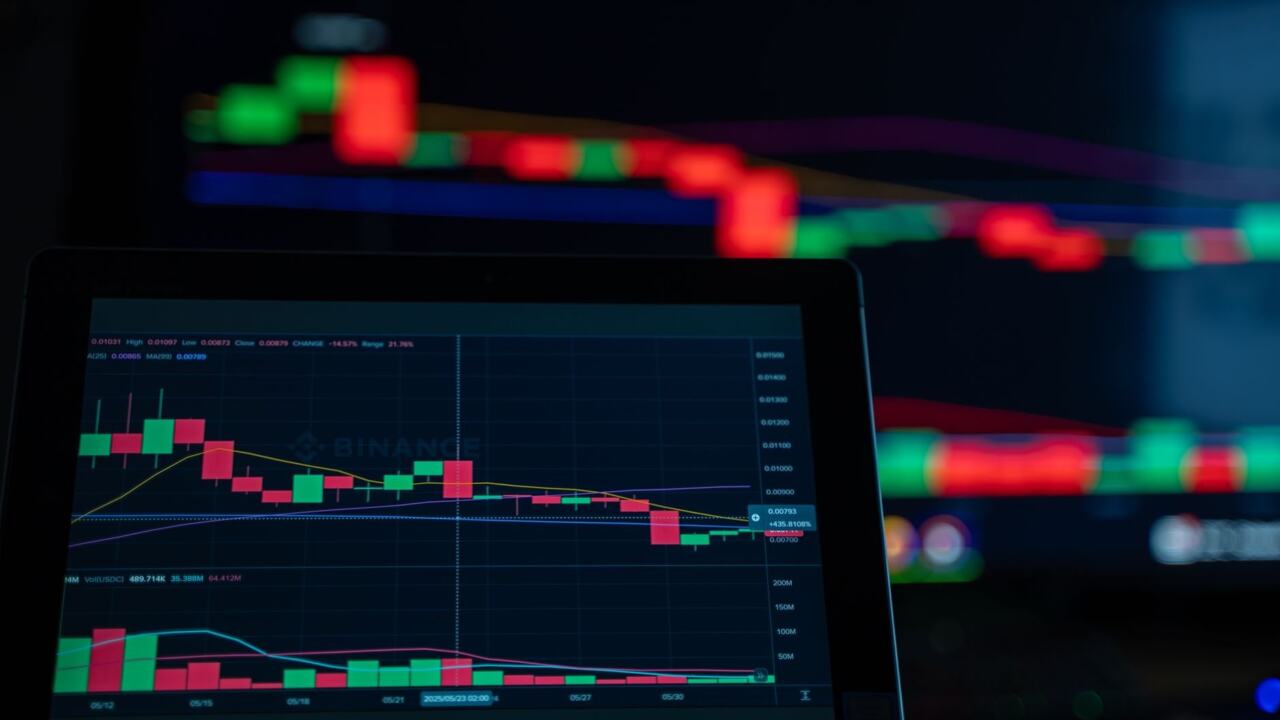
You have a bank card, a few coins in mind and several exchange tabs open: crypto exchange reviews should settle the choice by scoring every platform on the same published criteria, with unknown values marked as unknown.
- Starting out: in Consumer Reports’ evaluation, Coinbase scored highest (70 on a 100-point scale) and offered the most intuitive experience for basic transactions.
- Safety: none of the exchanges Consumer Reports reviewed clearly disclosed key risks at signup, including the lack of FDIC protection for coins, so check custody, reserves and licensing before you deposit.
- Cost: read the fee schedule for your payment method and trading style, because no reviewed exchange explained in detail how its fees were calculated.
This page is the hub for exchange-by-exchange write-ups and the method behind them. If you want a ranked shortlist rather than a method, go straight to our best crypto exchanges list, then come back here to test any name on it against the same criteria.
Pick your route through the reviews
Most readers arrive with one dominant goal. Follow the route that matches yours first, because the order in which you check an exchange matters: a platform that fails your first test rarely deserves time on the later ones.
- You are buying for the first time. Begin with interface clarity and risk warnings, not fee tiers. The best crypto exchange for beginners guide narrows the field, and the coinbase review covers the platform Consumer Reports found easiest for basic transactions.
- You care most about cost. Learn how the two order types are charged, then compare schedules. The maker vs taker fees explainer covers the mechanics, and the lowest fee crypto exchange comparison applies them to named platforms.
- You trade often. Order types, depth and fee tiers matter more than onboarding polish. See the best crypto exchange for day trading page for how active traders should weigh them.
- You will mostly use a phone. The best crypto exchange app page compares app experience rather than the web platform.
- You want a platform with a licence and a regulator behind it. Start with regulated crypto exchanges, where licensing is the first filter and everything else comes second.
- You want fewer identity checks. Read about no KYC crypto exchanges before choosing, because skipping verification changes the risk profile of the whole account, not only the signup step.
- You would rather hold your own keys. The cex vs dex comparison explains what you gain and give up by leaving a company-run platform.
Whichever route you take, the remaining sections explain what is being measured and why a single headline score is a poor guide.
What a cryptocurrency exchange does
A cryptocurrency exchange is a platform where you buy, sell and often store digital assets. It is the main entry point for most holders: in a Consumer Reports survey of over 2,200 US adults in September 2025, 49% of crypto investors said an exchange was their primary way of transacting. That concentration is why the quality of an exchange’s disclosures, controls and fees has such a direct effect on ordinary users.
Spot trading
Spot trading means buying or selling an asset at the current market price for delivery now, as opposed to contracts based on a future price. For most newcomers this is the only product worth learning first. Each spot order is either a maker order, which rests on the order book and supplies liquidity, or a taker order, which executes against orders already there. Makers are described as the creators of market depth and takers as the executors of existing orders, and that split drives how you are charged.
The practical lesson is that a clean chart is not an evaluation. What a review should check is what happens when you press buy: the price shown, the fee added and the way the order is filled.
Custodial wallets
When you leave coins on an exchange you are normally using a custodial wallet, meaning the platform holds the assets on your behalf. That convenience is also the central risk. Your claim depends on the company’s controls, its legal structure and how clearly it describes them. Consumer Reports found that Gemini gave clearer custody and asset-protection disclosures than its peers and described a trust-based custody structure. Understanding which party holds your coins is the first thing to settle, before any fee comparison.
The criteria every review uses
Reviews on this site are meant to score each exchange against the same list, so two platforms can be compared line by line. The list covers fees, security, licensing, withdrawals and support, plus supported coins, payment methods and app experience. Where a value cannot be established for an exchange, the review says it is unknown instead of filling the gap with an impression.
That approach follows the logic of the best consumer evaluations. Consumer Reports built its framework as an evaluation tool for financial products that prioritises consumer safety, privacy and transparency, and also looks at user-centricity, inclusivity, financial well-being and environmental, social and governance factors. For a retail buyer, three of those are the practical core.
- Safety: how assets are held, whether reserves are published and whether the platform warns you before an irreversible transfer.
- Transparency: whether fees, risks and custody terms are explained in plain language before you commit money.
- User-centricity: whether a beginner can complete a basic transaction without guessing, and whether support is reachable when something goes wrong.
A score on one of these should never be allowed to hide a weakness on another. An exchange with an excellent interface and poor risk disclosure is a different product from one with clunky screens and strong custody explanations, and the right choice depends on which weakness you can live with.
Fees and funding
Fees are the easiest criterion to quote and the hardest to compare fairly. The most important finding on this topic is that disclosure itself is weak: Consumer Reports found that none of the five exchanges explained in detail what their fees were for or, for many, how they were calculated, although all of them showed prices at the point of purchase. Binance.US describes its own calculation as varying with the digital asset, transaction type, payment method, liquidity and volatility.
The decision for you is straightforward. Treat the quoted price at checkout as the number that counts, and use the published schedule to understand why it moves. If the platform shows a total before you confirm, compare totals; if it only shows a rate, assume the real cost depends on conditions you have yet to see.
Maker and taker fees
As an incentive for being patient and supplying liquidity, maker fees are lower than taker fees. That makes order type a cost lever. A limit order that rests on the book can qualify as a maker order, while a market order that executes immediately is a taker order. If you buy once and do not mind waiting, a resting order is the cheaper habit. If speed matters more than a fraction of a percentage point, expect to pay the taker rate.
Published fee examples
Base-tier schedules for spot trading look similar across large platforms, and the differences appear at higher volume tiers. The following figures come from a fee comparison page last updated on 25 November 2023, so confirm them on each exchange before relying on them.
- Binance: regular users with a 30-day volume under 1,000,000 USD are listed at 0.1000% maker and 0.1000% taker.
- Bybit: the VIP 0 tier, with a balance up to 50K and 30-day volume from 0 to $1M, is listed at 0.1000% maker and 0.1000% taker.
- KuCoin: level 0 is listed at 0.100% maker and 0.100% taker.
- OKX: level 1 is listed at 0.080% maker and 0.100% taker, so its maker rate is lower than its taker rate at that level.
These figures are from a third-party fee comparison, not from the exchanges’ own pages, so treat them as a snapshot rather than a current quote. What they show clearly is that the starting rate rarely separates large platforms. Tier thresholds, payment method charges and the spread built into a simple buy button are where costs diverge, and those are what the lowest fee crypto exchange guide examines platform by platform.
Payment methods
How you fund the account changes what you pay. Consumer Reports notes that Binance.US fee calculations differ with the payment method, and the same logic is a sound default for any exchange: a bank transfer, a card and a balance already on the platform are not interchangeable.

Before you fund an account, compare the final amount of coin you would receive for each method on the confirmation screen. A review that lists payment methods without that comparison has only answered half the question.
Supported coins
Listing breadth varies widely. CoinMarketCap’s exchange rankings show Binance with 914 coins and Coinbase Exchange with 412. A longer list helps if you want smaller assets, but it is not a quality measure on its own. If you only intend to hold the largest assets, such as Bitcoin and Ethereum, coin count should carry very little weight in your decision; custody and fees matter far more.
Security, custody and licensing
Security is where review quality matters most, because the cost of a mistake is not a higher fee but a loss that may be permanent. The context is serious: crypto investors faced a record $17 billion in losses from scams and fraud, according to Chainalysis as cited by Consumer Reports.
Risk disclosure at signup and transfer
None of the five exchanges clearly disclosed key risks during onboarding, including the lack of FDIC protection for coins. That matters because a person who assumes a crypto balance is protected like a bank deposit may take risks they would otherwise avoid. Warnings before a transfer also differed. Only Gemini asked users to agree to multiple acknowledgements of fraud risk. Binance.US, Coinbase and Crypto.com showed a single alert box that users could easily dismiss without reading, and Kraken gave no notice of scam or irreversibility risk in its transfer flow.
Read that as a reason to slow down yourself, not as a reason to trust the exchange to do it for you. Before sending coins to any address, confirm the address, the network and the recipient independently, because a transfer you start cannot be taken back.
Proof of reserves and trust scores
Proof of reserves is a publication in which an exchange shows evidence of the assets it holds. It is useful, but it is one input, not a verdict. Trackers record whether data is available: on CoinGecko’s exchange list, Kraken and Binance show a 10/10 Trust Score with reserve data available, Coinbase Exchange shows 10/10 with a third-party audit for assets, and Gemini and Binance US show 8/10 with reserve data available. CoinGecko calculates the score on metrics such as liquidity, scale of operations and cybersecurity score, so it blends trading strength with security signals.
For a review, the right use of those figures is as a filter for follow-up, not a safety guarantee. A high score tells you an exchange is large and has published data. It does not tell you how the company would treat customers in a failure, which is why custody terms and licensing sit next to it in every review.
Licensing and regulation
Licensing is checked against the financial regulator’s own register in the country where you live, not against a badge on the exchange’s homepage. The question to answer is whether the entity that will hold your account is authorised to serve customers in your jurisdiction, and which rules apply if something goes wrong. The regulated crypto exchanges guide explains how to run that check and what it does and does not tell you. Being licensed in one place is not the same as being protected in another.
Account protection
Account takeover is a practical risk that no exchange policy removes. Turn on every available login protection, use a unique password for the exchange account and treat any message asking you to move funds urgently as suspect. If you plan to hold coins for a long period, consider moving them to a wallet whose keys you control, a trade-off covered in the cex vs dex comparison.

Scores side by side
The table below puts the figures that can be compared on common ground next to each other. Consumer Reports’ evaluation used screenshots from December 2025, and the CoinGecko entries refer to the exchange listings it tracks. Where a value is not established, the cell says unknown.
| Exchange | Consumer Reports overall score (100-point scale) | CoinGecko Trust Score and reserve status | Fraud warning before transfer | Planning use |
|---|---|---|---|---|
| Coinbase | 70 | Coinbase Exchange: 10/10, third-party audit for assets | Single dismissible alert | Strongest overall score and the clearest interface for basic transactions; add your own caution at transfer. |
| Binance | 57 | 10/10, reserve data available | Unknown | Broad coin list and strong tracker score; confirm the warning flow yourself. |
| Gemini | 53 | 8/10, reserve data available | Multiple acknowledgements | Suits readers who value clear custody disclosures and stronger transfer warnings. |
| Kraken | 44 | 10/10, reserve data available | No notice in transfer flow | Strong reserve signal but no scam warning at transfer, so slow down on sending. |
| Crypto.com | 41 | Unknown | Single dismissible alert | Lowest overall score of the five; check custody terms before funding. |
Overall scores and fraud-warning behaviour are from Consumer Reports’ crypto exchange evaluations, and trust scores and reserve status are from CoinGecko’s exchange listings.
The table shows why a single ranking misleads. Kraken scores well on the tracker’s trust metric yet lowest among the top four on the consumer evaluation, and the gap sits partly in how it handles warnings at transfer. Consumer Reports did not identify a single best exchange because strengths and weaknesses varied across platforms, and the table bears that out.

Exchange-by-exchange reviews
Each full review applies the criteria above to one platform, and states plainly where a figure is not available.
- Coinbase: the coinbase review centres on the ease of basic transactions and the single dismissible alert before transfers, so beginners can see where the interface helps and where they must add their own care.
- Kraken: the kraken review weighs a strong reserve-data signal against the absence of a scam or irreversibility notice in its transfer flow.
- Binance: the binance review covers the long coin list and the base-tier spot fee, alongside the question of which fee conditions apply to you.
- Bybit: the bybit review looks at its tiered schedule, where the lowest VIP tier lists the same rate for makers and takers.
- Bitfinex: the bitfinex review applies the same fee, security, licensing, withdrawal and support criteria.
- Changelly: the changelly review is worth reading separately, since a swap service raises different questions from an order-book exchange.
If you are comparing more than two names, read the reviews in the order that matches your route at the top of this page instead of working alphabetically. The criteria you care about most should decide which review to open first.
App experience
For many retail users the app is the exchange. Consumer Reports evaluated exchange apps, and its finding that Coinbase offered the most intuitive experience for basic transactions is the clearest published comparison of ease of use. A good app lowers the chance of a wrong order, but it should also slow you down at moments of real risk, such as sending funds out.
When you test an app, look for clear totals before confirmation, an obvious distinction between buying and sending, and warnings that are hard to click through without reading. The best crypto exchange app page compares platforms on those points.
Using rankings and trackers well
Tracker sites are useful for orientation, provided you know what they measure. CoinMarketCap ranks and scores exchanges on traffic, liquidity, trading volume and confidence in the legitimacy of reported volume, and it tracks 231 spot exchanges with a total 24h volume of $693.18B. CoinGecko, by contrast, tracks 154 exchanges with a total 24h trading volume of $67.4 billion, and its Trust Score runs from 0 to 10.
Those numbers are not meant to match. Each tracker chooses which venues to include and which measures to weight. A volume-led ranking tells you where activity happens; it does not say whether customers are treated well. Use trackers to build a shortlist, then use the consumer-focused criteria above to choose from it.
Before you deposit
Work through these steps in order. They apply after you have chosen a route and read the relevant review.
- Confirm the legal entity. Find out which company will hold your account and check it against your regulator’s register.
- Read the custody terms. Find where the platform states how customer assets are held, and note that coins are not protected like bank deposits.
- Check reserve information. Look for a published reserve or audit statement and treat its absence as a mark against the exchange, not a neutral gap.
- Price your actual purchase. Get the confirmation total for your payment method rather than relying on a headline rate.
- Start small. Make a modest first purchase and a test withdrawal to see how the platform behaves before committing more.
If a platform cannot answer the first three plainly, choose another one; no fee advantage justifies uncertainty about who holds your coins.
Frequently asked questions
| Question | Answer |
|---|---|
| What is the best crypto exchange for beginners? | Consumer Reports did not name a single best exchange because strengths varied. Coinbase had the highest score and the most intuitive basic transactions, while Gemini gave clearer custody and fraud-risk disclosures, so the better pick depends on whether you value simplicity or disclosure. |
| How do crypto exchange fees compare? | Base spot rates for large platforms are close, mostly 0.1000% or 0.100% for both makers and takers in one third-party snapshot, with OKX listing 0.080% for makers at level 1. Real cost then depends on your volume tier, order type and payment method. |
| Is a given crypto exchange safe and regulated? | No single rating settles it. Combine the custody disclosures, any published reserve or audit data and a check of your regulator’s register, and remember that none of the exchanges Consumer Reports reviewed clearly flagged the lack of FDIC protection at signup. |